





Selling subscriptions for exclusive content is an effective way to generate recurring revenue and build stronger relationships with loyal audiences. Content creators can offer members access to educational materials, videos, downloadable files, Q&A sessions, or special services in exchange for a subscription fee.
Instagram has also introduced subscriptions as a way for creators to earn monthly income while providing exclusive content and experiences to their followers. As the number of subscribers grows, managing member information and maintaining regular communication with them becomes increasingly important.
At the beginning, the number of subscribers may be limited, making it possible to record their information through direct messages, Excel spreadsheets, or even a notebook. However, as subscription sales increase, this simple method can quickly become a major source of wasted time, disorganization, and errors.
Manual management is not limited to recording members’ names. Payment verification, calculating subscription start and end dates, activating memberships, sending renewal reminders, controlling access, and tracking revenue must also be handled for each user. Without a clear and structured process, these tasks can create numerous problems for both the account owner and premium members.
Member Information Becomes Scattered Across Different Platforms
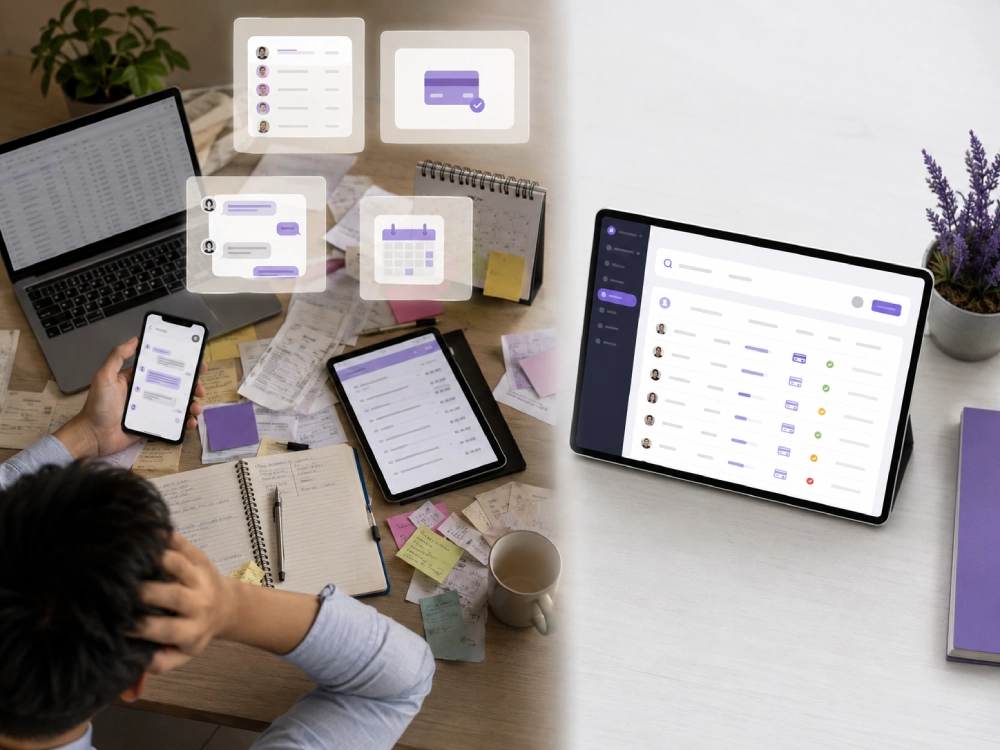
One of the first problems with manual management is the scattered nature of member information. A user’s name and phone number may be recorded in Instagram Direct, their payment receipt may be sent through another messaging app, and their subscription expiration date may be stored in an Excel file.
In this situation, checking the status of a single member requires searching through several different platforms. This slows down response times and increases the risk of losing important information.
For example, the account owner may know that a user has paid the subscription fee but may be unable to find the payment receipt or remember the exact membership start date. Even when the information has not been deleted, locating it among a large number of messages and files can be time-consuming.
Keeping all member information in one centralized dashboard makes it possible to view each member’s status without searching across multiple tools and platforms.
The Risk of Data Entry Errors Increases
Manual data entry always carries the risk of human error. Entering an incorrect phone number, username, payment amount, or subscription expiration date can disrupt the entire membership process.
For example:
- The subscription expiration date may be recorded one month earlier or later than it should be.
- The user’s payment amount may be entered incorrectly.
- A one-month plan may be recorded instead of a three-month plan.
- The Instagram username may be saved with incorrect spelling.
- The information of two members may be mixed up.
- A subscription renewal may not be recorded in the main file.
These mistakes may seem minor at first, but they can lead to user dissatisfaction, financial disputes, or the accidental removal of a member’s access.
As the number of members grows, the likelihood of these errors occurring repeatedly also increases.
Membership Activation Is Delayed
Users who pay for a subscription expect to gain access to exclusive content within a short period of time. With manual management, membership activation depends entirely on the administrator’s availability and response time.
If a payment is made outside working hours, on a holiday, or when the administrator cannot check messages, the user must wait for the subscription to be activated.
This gap between payment and access can create a poor user experience. The user may assume that the payment was not recorded or that something went wrong during the purchase process.
In an automated system, a successful payment is directly connected to membership registration, allowing the user’s status to be updated without waiting for manual review.
Subscription Expiration Dates Are Forgotten
Each subscription plan has a specific validity period. One user may purchase a one-month plan, while another may choose a three-month or six-month plan. As a result, not all subscriptions expire on the same date.
With manual management, the account owner must calculate and record the expiration date of each subscription separately. As the number of members grows, checking these dates on a daily or weekly basis becomes increasingly difficult.
Renewal Opportunities Are Missed
Not every user who fails to renew their subscription is dissatisfied with the service. Some members simply forget the expiration date or do not know what steps they need to take to renew.
In a manual process, the administrator must identify members whose subscriptions are close to expiring and send each of them a separate message. As the number of users increases, these reminders may not be sent on time.
This lack of organization can lead to missed renewals and lower recurring revenue. Automated notifications can inform users about their subscription status and renewal process at the right time.
Responding to Members Becomes More Difficult
Users may have questions about their expiration date, payment status, selected plan, or access method. When information is stored across several different platforms, even answering a simple question can take time.
This process consumes the administrator’s time and leaves the user waiting. A centralized dashboard, on the other hand, should display each member’s subscription status, plan, and expiration date in one place.
There Is No Accurate Revenue Reporting
Subscription management is not limited to tracking members. The account owner also needs to know:
- How many subscriptions have been sold?
- Which plan generates the most sales?
- How much revenue was earned each month?
- What amount is available for settlement?
- Which transactions were successful or unsuccessful?
- How many users renewed their subscriptions?
When financial information is scattered across receipts, messages, and separate files, calculating accurate revenue becomes difficult.
Identifying Loyal Members Becomes More Difficult
Members who have renewed their subscriptions several times are highly valuable to an account or brand. These users often have a stronger relationship with the content creator and can provide useful feedback.
With manual management, renewal history may not be recorded properly. As a result, identifying long-term members becomes difficult.
Recognizing this group creates opportunities to offer benefits such as:
- Renewal discounts
- Bonus content
- Early access to products or courses
- Invitations to exclusive sessions
When each member’s history is available, building a more personal and valuable relationship with loyal users also becomes easier.
The Process Becomes Too Dependent on the Administrator
With manual management, a large part of the information and workflow depends on the administrator’s memory or personal files. If the administrator is unavailable for a period of time or stops working with the account, member information may become incomplete or difficult to access.
Training a new administrator to review messages, payment receipts, and multiple files can also take a considerable amount of time. A centralized structure ensures that information is not dependent on one specific person.

Conclusion
Manual subscription management may seem simple at the beginning, but as the number of users grows, it becomes one of the main causes of disorganization, wasted time, and operational errors. Scattered information, delayed membership activation, forgotten expiration dates, difficult payment verification, and excessive dependence on the administrator can weaken the user experience and make financial and administrative processes harder to control.
Using a centralized dashboard allows member information, payment status, subscription duration, renewals, and revenue reports to be recorded within one clear system. This makes subscription management faster, more accurate, and more reliable.